Vein Clinic
Vein problems are common in the U.S. and around the world. By age 50, nearly 40% of women and 20% of men have some type of significant vein disorder. Vein issues can be not only visually noticeable but also very painful for patients who suffer from it.
At Dermatology, Laser & Vein Specialists, we are passionate about treating veins at our Charlotte-based vein clinic, which is an Intersocietal Accreditation Commission (IAC) Accredited Vascular Testing Facility led by Dr. Gilly Munavalli & Dr. Payman Kosari. The IAC reserves this designation for facilities that have met the highest level of national standard compliance within the field of vascular testing. Our physicians are supported by two registered vascular technologists/diagnostic medical sonographers, a registered nurse, health insurance specialists & an extensive support team, all of whom are prepared to guide you through your vein treatments at DLVSC.
Vein problems can take on many forms, but at our vein clinic, we help focus primarily on helping patients with:
- Leg pain, swelling, bulging varicosities, and ulcers caused by vein insufficiency
- Unsightly and embarrassing spider veins
- Hand veins and more

FAQs
Varicose Veins
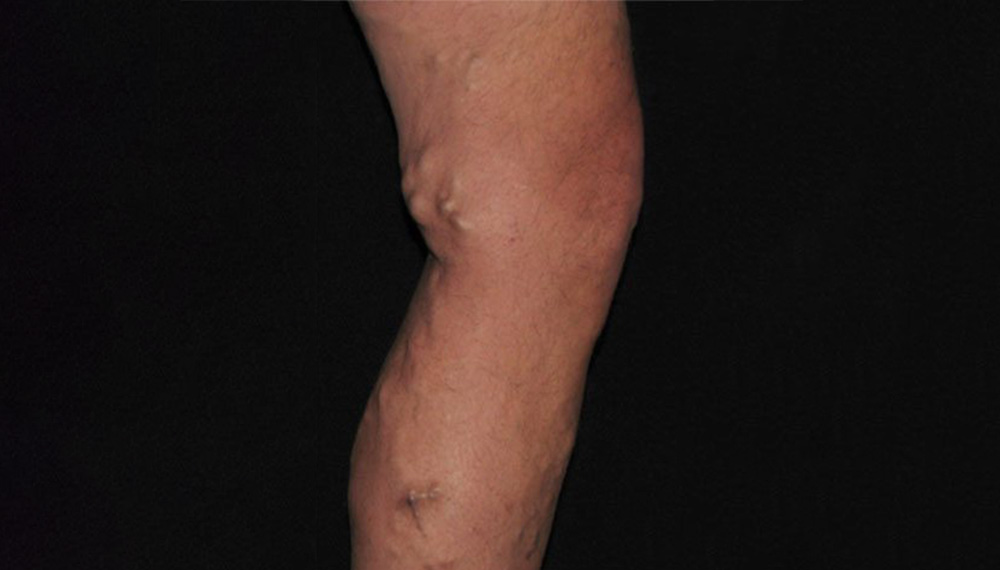
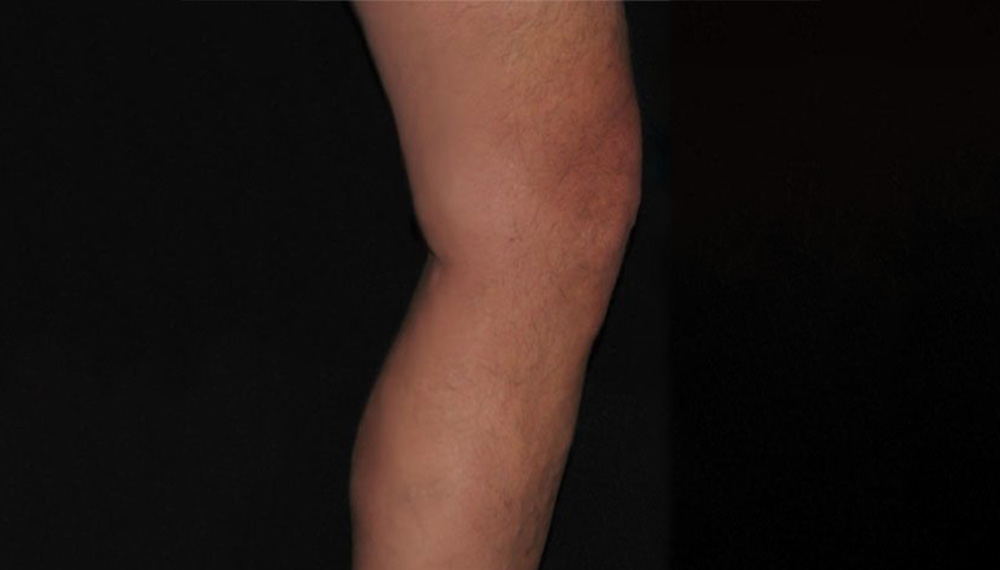
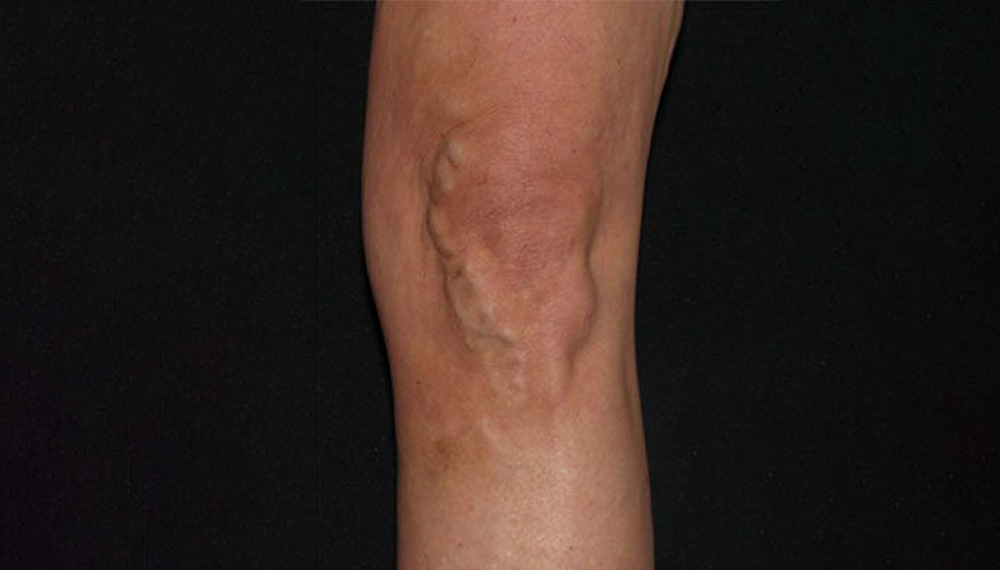
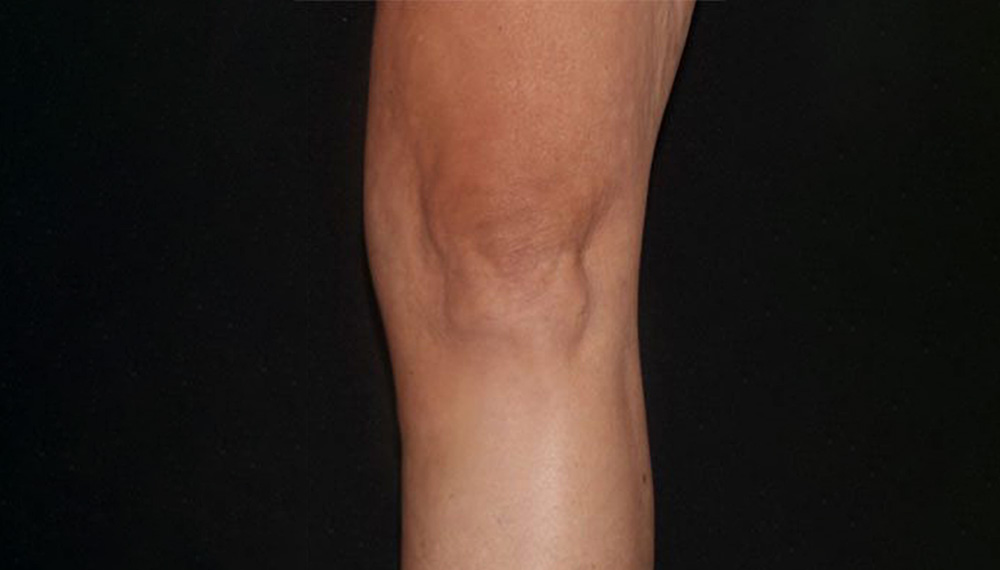
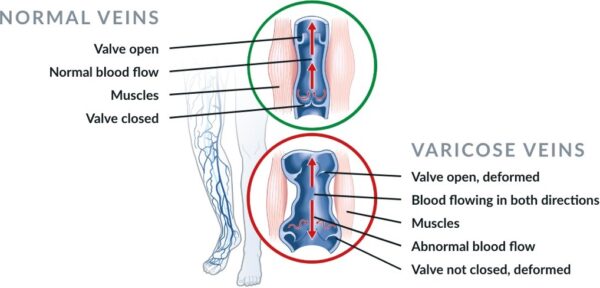
Varicose veins are enlarged “rope-like” veins that are swollen and raised above the surface of the skin. They can be blue, dark purple or even flesh-colored and often look like a cluster of grapes. They are most commonly seen on the inside of the legs and back of the calves.
However, they can form anywhere on the legs, from groin to ankle. Varicose veins may progress and cause threatening blood clots or large ulcers on the legs and ankles if left untreated over time.
Varicose Veins Treatment
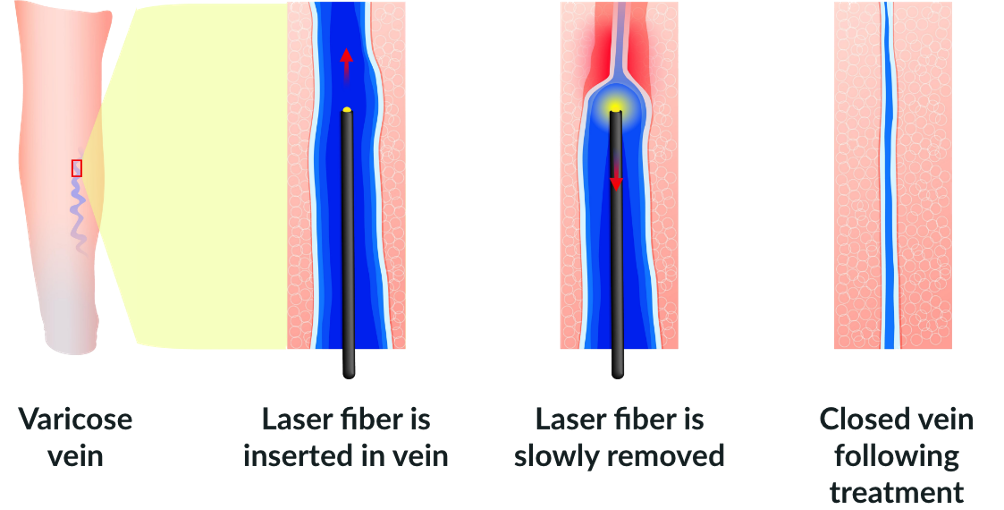
Endovenous Laser Ablation Therapy (EVLT) is a laser procedure used for treating insufficiencies in the venous system, which is the primary cause of unsightly, uncomfortable or symptomatic varicose veins. Instead of removing the diseased vein (e.g. “vein stripping”), EVLT leaves the vein intact while permanently sealing it off from within. EVLT allows for simple, rapid relief of symptoms, fast recovery and 98%-100% success rate.
The VenaSeal™ closure system is the only procedure that uses a patented medical adhesive delivered endovenously (directly into the vein) to achieve closure of the vein. Guided by ultrasound, the physician inserts a catheter into the diseased area of the vein. Once in place, the physician administers the VenaSeal adhesive through the catheter at various points in a segmental fashion – using only manual compression to press the vein closed along the way.
Once the treatment is complete, blood trying to travel through this vein is then re-routed through other healthy veins in the leg. Possible side effects or complications include minimal discomfort, bruising and/or mild inflammation. The development of more serious complications, such as infection, bleeding and/or blood clots, is extremely rare with this procedure.
Ambulatory phlebectomy is a minimally invasive, outpatient procedure developed by dermatologic surgeons that removes superficial veins through small, slit-like incisions in the skin. Prior to the procedure, local anesthesia is used to numb the treatment area before the physician makes a very small incision. The bulging vein is then extracted through the incision, resulting in immediate improvement in appearance. In order to speed up healing time, we will advise you to walk around and refrain from sitting or standing for long periods of time for a few weeks after the procedure. Patients are usually able to go about their normal daily activities shortly after having this procedure. Possible side effects or complications include temporary discomfort, bruising, inflammation, skin numbness and allergic reaction to local anesthesia. All of these potential side effects are treatable.
Ultrasound-guided sclerotherapy is used for the treatment of deeper diseased accessory vein branches that cannot be seen or felt. Using ultrasound, a solution is injected into the veins causing the vein walls to collapse. Therefore, USGS requires expert knowledge that conventional sclerotherapy does not. As the larger veins are treated, smaller spider and reticular veins will often disappear as a result. Possible side effects or complications include brown discoloration of the vein that may take up one year to disappear and usually requires repeated treatments. In very rare cases, skin ulcers may form in the treatment area. Also rare, but a possibility with any medication, allergic reactions can occur. All of these potential side effects are treatable.
Varithena® (polidocanol injectable foam) is a prescription medicine used to treat varicose veins caused by problems with the great saphenous vein (GSV) and other related veins in the leg’s GSV system. Varithena improves symptoms related to or caused by varicose veins, and the appearance of varicose veins. Varithena is minimally invasive, nonsurgical and takes less than an hour to complete.The doctor administers a small amount of Varithena through a catheter or by direct injection into the malfunctioning vessels.
Spider Veins
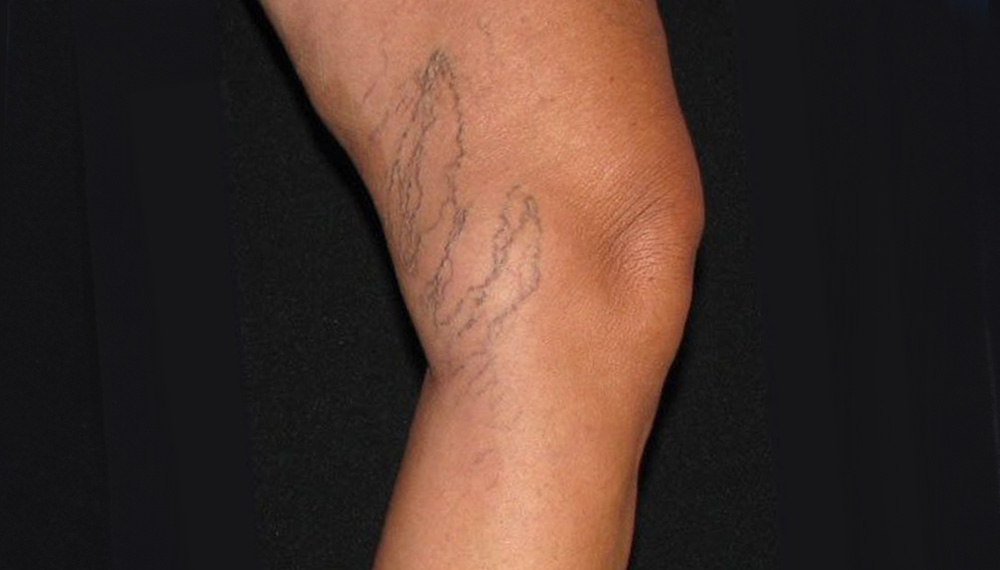
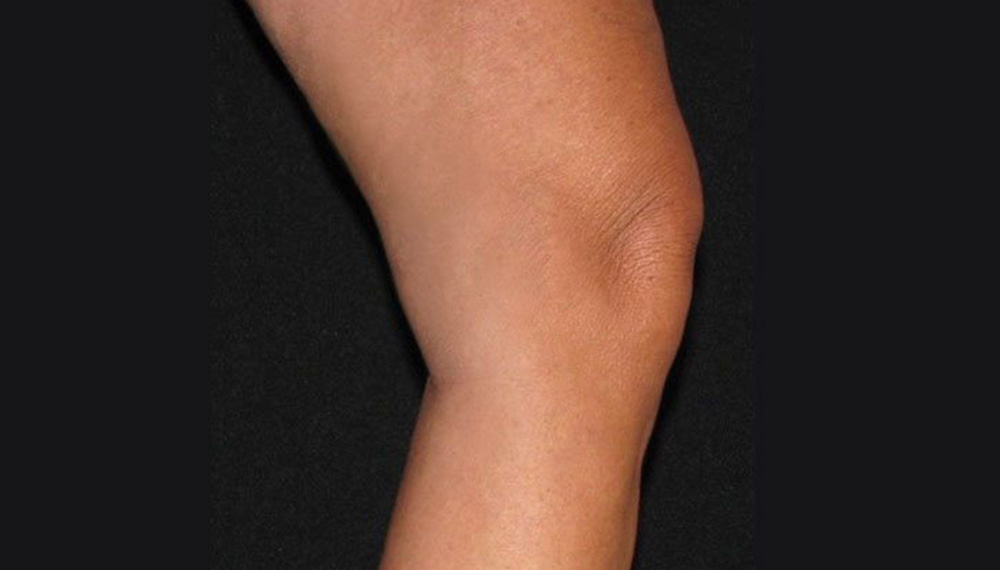
Spider veins are similar to varicose and reticular veins, but they are much smaller and closer to the surface of the skin. They are often red or blue and look like tiny tree branches or spider webs. They can occur anywhere on the body (legs, hands, face) and can cover either a very small or very large area of skin. They don’t bulge like varicose veins, but are often very noticeable and unsightly. Spider veins are not harmful to your health at all. These veins are an unfortunate inevitability with age and may continue to pop up even after treatment. Due to this fact, many patients seek subsequent treatments to maintain vein-free legs over time.
Spider Vein Treatment
Sclerotherapy is the most commonly used treatment for small diameter (5mm) veins, often referred to as spider veins or reticular veins. The procedure involves injecting a sclerosant medication into each vein with a tiny needle, thereby causing an inflammation of the vein walls. As a result, the walls collapse and stick to one another. Combined with the proper use of compression garments after treatment, the treated vein stops carrying blood and it is re-routed to other healthy veins nearby. Sclerotherapy typically requires multiple sessions in order to fully address the problem.
Reticular Veins
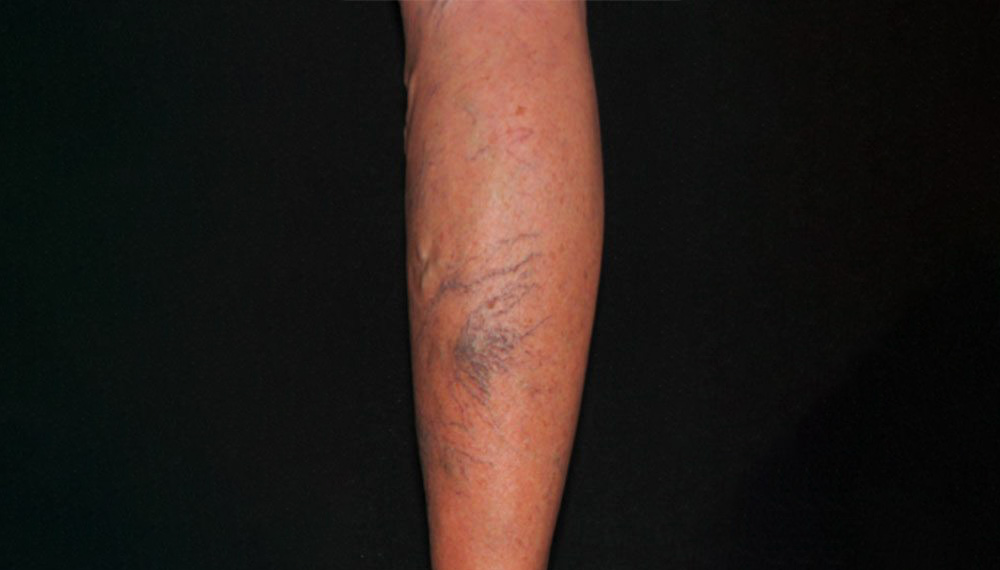
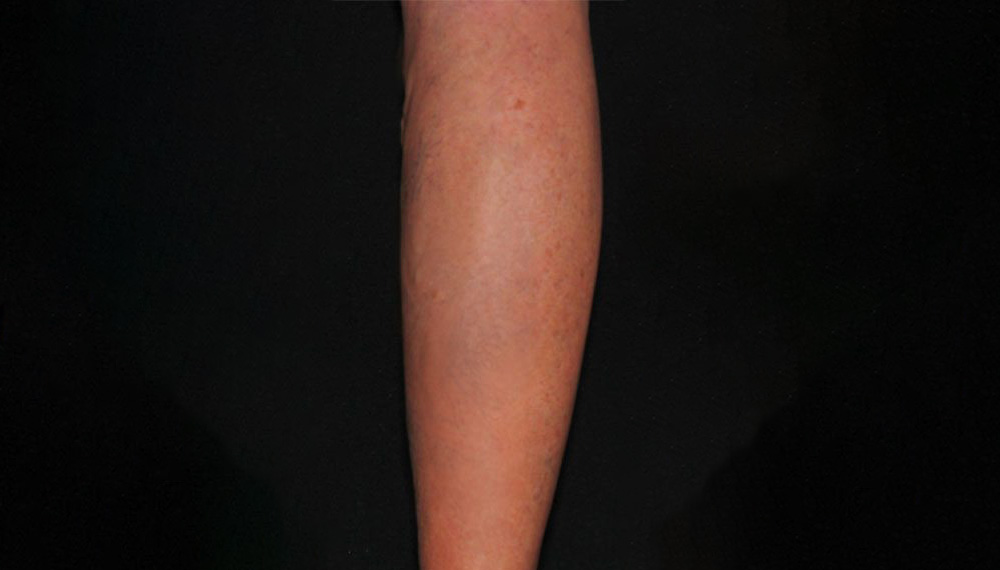
Reticular veins, also known as “blue veins” or feeder veins, may have a similar ropy appearance to varicose veins but are much smaller in size. They occur mainly on the back or outside of the leg, usually around the lower thigh and knee. Reticular veins may feed into spider veins, which are smaller than reticular veins and don’t bulge or cause discomfort. They look like red or blue spider webs on the skin’s surface.
Reticular Vein Treatment
Ultrasound-guided sclerotherapy is used for the treatment of deeper diseased accessory vein branches that cannot be seen or felt. Using ultrasound, a solution is injected into the veins causing the vein walls to collapse. Therefore, USGS requires expert knowledge that conventional sclerotherapy does not. As the larger veins are treated, smaller spider and reticular veins will often disappear as a result. Possible side effects or complications include brown discoloration of the vein that may take up to one year to disappear and usually requires repeated treatments. In very rare cases, skin ulcers may form in the treatment area. Also rare, but a possibility with any medication, allergic reactions can occur. All of these potential side effects are treatable.
Hand Veins
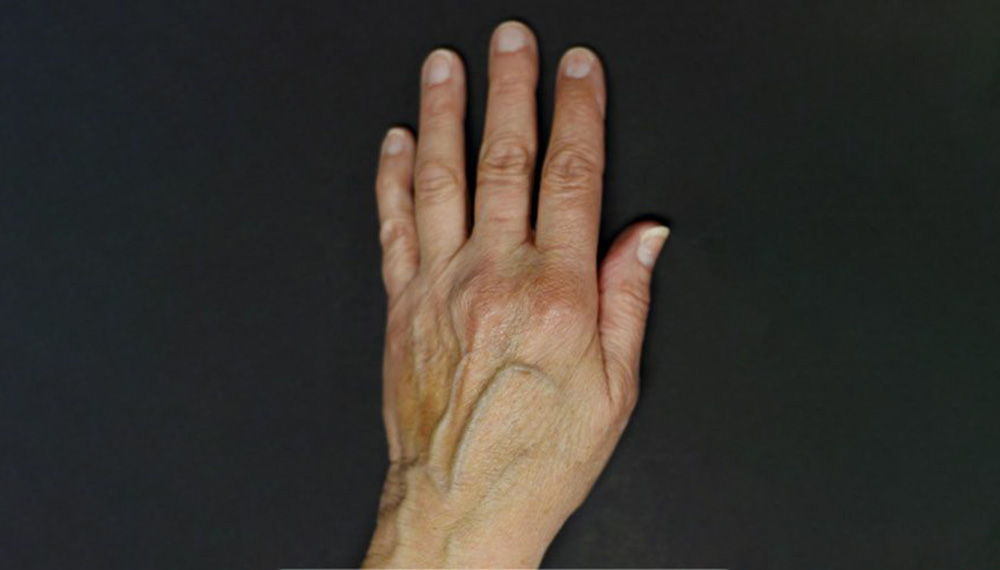
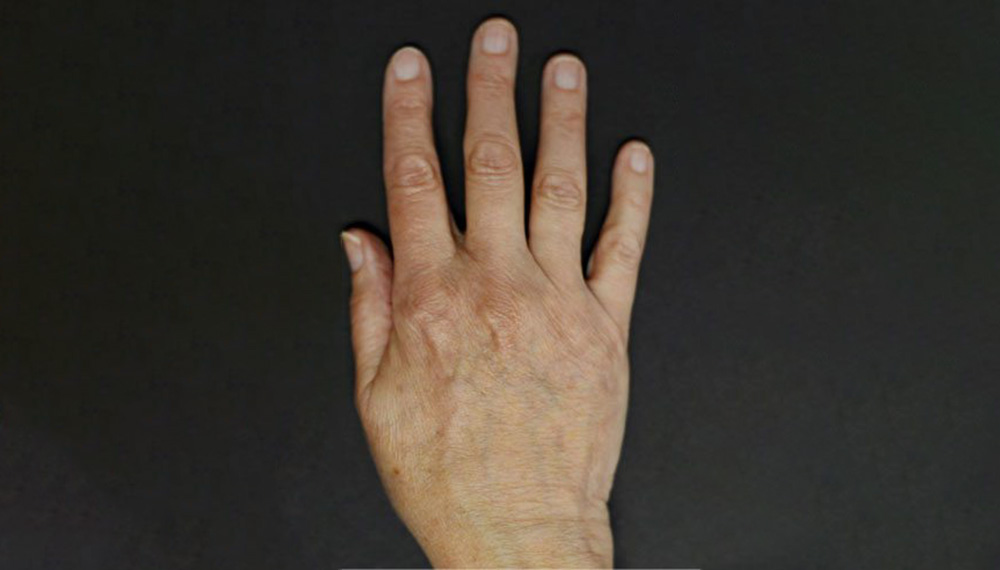
Sun, gravity and other environmental exposures subject the hands to unique combinations of physiologic and environmental stress causing hands to lose volume as a result of muscle atrophy, bone demineralization, and loss of normal fatty tissue. This results in wrinkled, discolored skin and prominent superficial veins of the hand. These veins get larger and more noticeable over time.
Hand Vein Treatment
Sclerotherapy is just as effective for the treatment of spider veins on the hands as it is for the legs. The procedure involves injecting a sclerosant medication into each vein with a tiny needle, thereby causing an inflammation of the vein walls. As a result, the walls collapse and stick to one another. Combined with the proper use of compression stockings after treatment, the treated vein stops carrying blood and it is re-routed to other healthy veins nearby. Sclerotherapy typically requires multiple sessions in order to fully address the problem.
Varicose Veins
Spider Veins
Spider & Reticular Veins
Hand Veins