Mohs Surgery
Mohs Micrographic Surgery is an advanced removal technique commonly used for treating complex skin cancers. Unlike other surgeries, Mohs involves removing skin around the affected area layer by layer, until the surgeon no longer sees any evidence of cancer and lab results confirm borders are clear of cancer cells. By allowing the surgeon to literally see where the cancer stops, Mohs surgery has been proven to have more effective outcomes and reduces scarring, compared to other procedures.
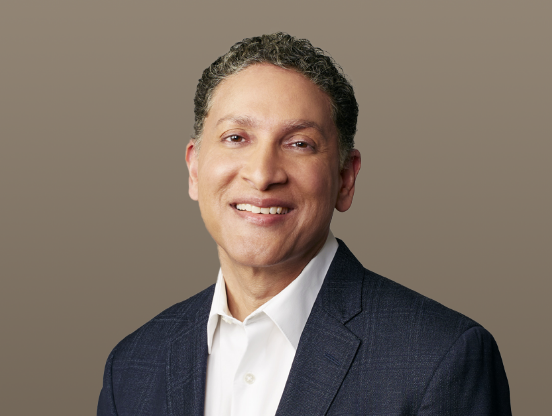
At DLVSC, we have a highly regarded, fellowship-trained Charlotte Mohs surgeon: Dr. Gilly Munavalli. Dr. Munavalli completed his Mohs Micrographic Surgery fellowship at The University of California San Francisco, a program approved by the American College of Mohs Micrographic Surgery and Cutaneous Oncology (ACMS).
Mohs Surgery is performed in our Midtown and Pineville offices on an outpatient basis, under local anesthesia. Below you will find helpful information regarding your Mohs surgery, FAQs and more.
Patient Guide: Mohs Surgery Wound Care
Patient Guide: Before Your Mohs Surgery
Our Mohs Surgeon
FAQs
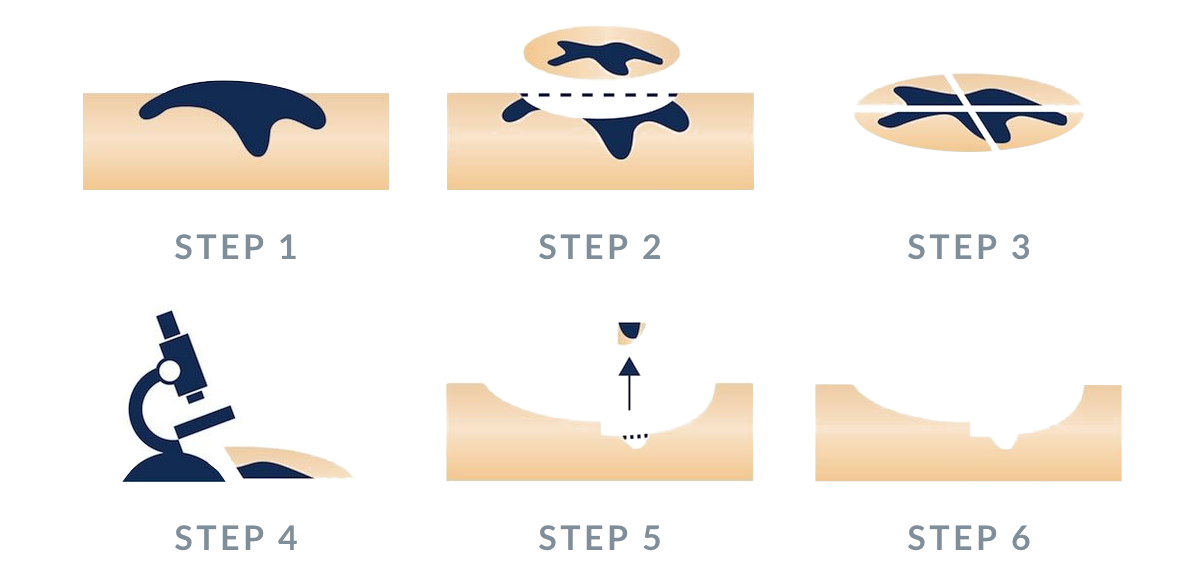
The Mohs Surgery Process
Step 1: The roots of a skin cancer may extend beyond the visible portion of the tumor. If these roots are not removed, the cancer will recur.
Step 2: The visible portion of the tumor is surgically removed.
Step 3: A layer of skin is removed and divided into sections. The ACMS surgeon then color codes each of these sections with dyes and makes reference marks on the skin to show the source of these sections. A map of the surgical site is then drawn.
Step 4: The undersurface and edges of each section are microscopically examined for evidence of remaining cancer.
Step 5: If cancer cells are found under the microscope, the ACMS surgeon marks their location onto the “map” and returns to the patient to remove another layer of skin – but only from precisely where the cancer cells remain.
Step 6: The removal process stops when there is no longer any evidence of cancer remaining in the surgical site. Because Mohs surgery removes only tissue containing cancer, it ensures that the maximum amount of healthy tissue is kept intact.